
Why acoustics matter
Good room acoustics help people concentrate, talk to each other and feel well. A short guide from the xilence know-how of XAL.
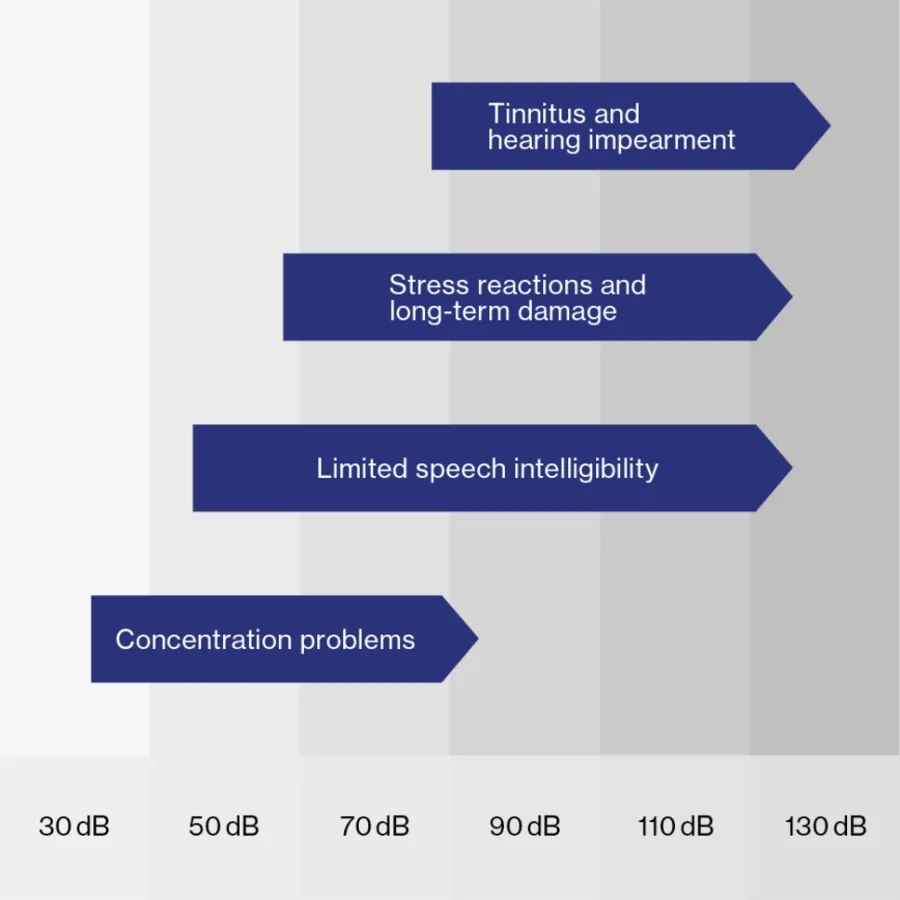
Noise is a stress factor
A quiet environment is a basic human need. Noise triggers the body’s stress response: useful for a moment, harmful when it never stops. At work, room acoustics are among the factors people name first for their well-being, and they affect productivity, communication and health.
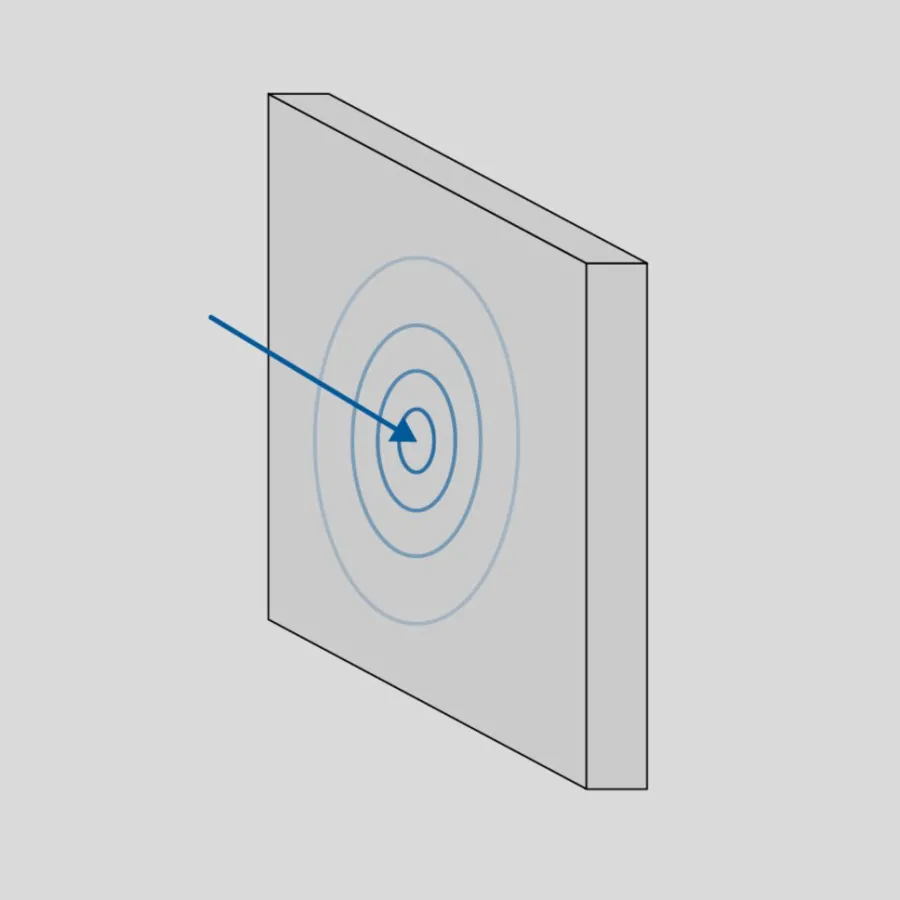
Absorb, block, scatter
There are three ways to treat a room. Absorbers take sound energy out of the room; how well they do this is given by the absorption coefficient from 0 to 1, across 125 Hz to 4000 Hz. Screens block sound on its way through the room and add privacy. Structured surfaces scatter sound, so the room sounds more even and natural.
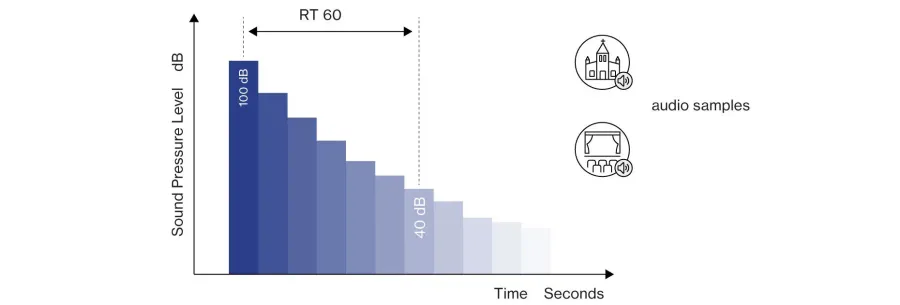
Reverberation time and speech intelligibility
Reverberation time describes how long a sound lingers in a room: several seconds in a church, around 0.3 seconds in a recording studio. If it is too long, speech becomes harder to understand, people raise their voices and the room gets louder still. This is known as the Lombard effect.

Planned to recognised standards
Standards set minimum values. They do not guarantee the best result, but they are a sound basis for planning. xilence plans to DIN 18041, ÖNORM B 8115-3, SIA 181 and, for offices, VDI 2569, and takes national requirements outside the DACH region into account.

A material with a second life
The acoustic elements are made of a moulded synthetic fleece with approximately 75% post-consumer recycled PET. It absorbs sound well, is durable and can be recycled.