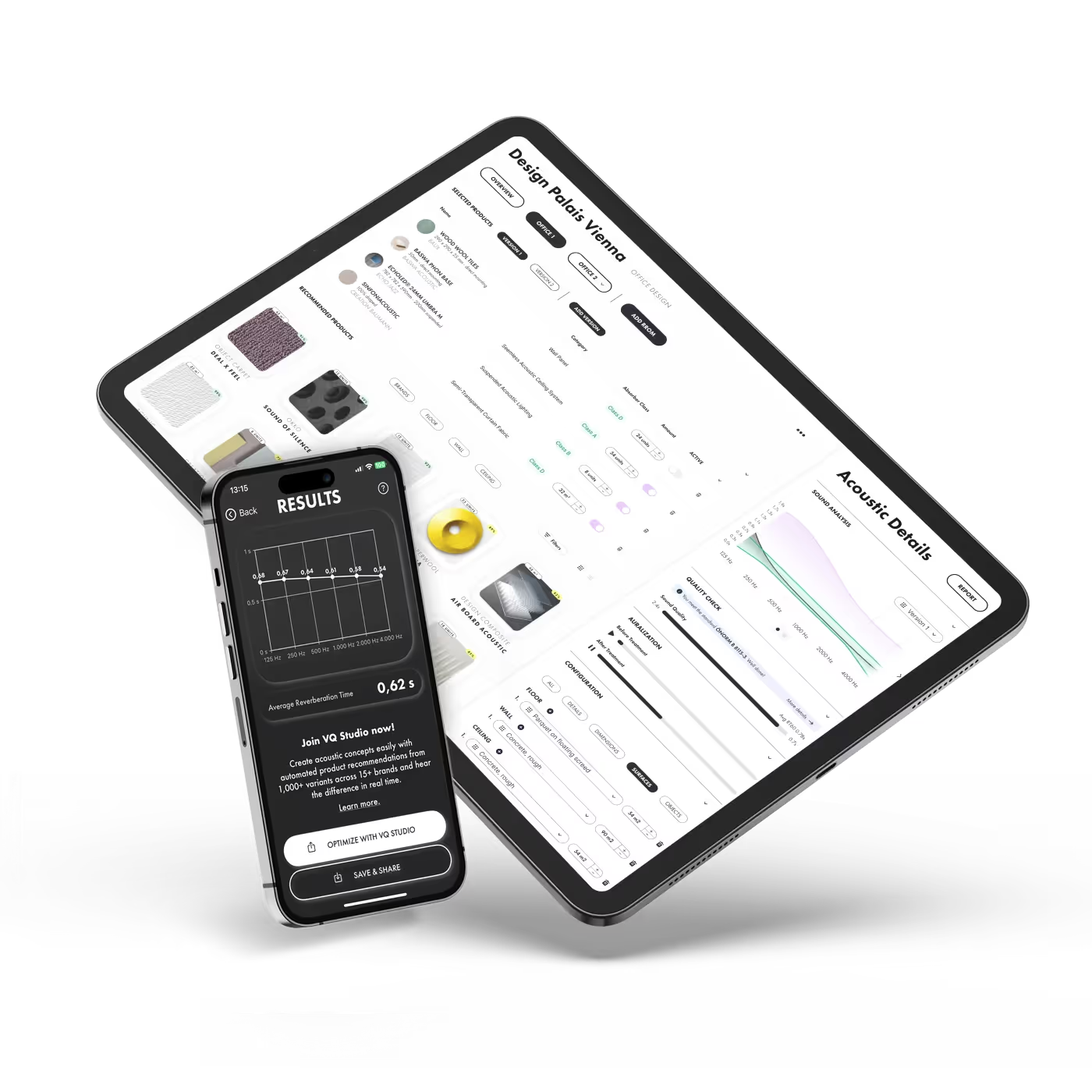
Research has shown that the acoustic environment has diverse effects on people's health and productivity. Therefore, acoustic properties are an important component in various premises to optimize the quality of sound and speech intelligibility. Not only every room, but also every furnishing object in it, has an individual acoustic property, which should be coordinated with each other. Consequently, an accurate analysis is relevant for national standards and well-being in the workplace.
Fundamentals/Basics
Acoustics is the science of controlling how sounds move in an enclosed area. This includes minimizing the transmission of sound from one area to another and controlling the properties of sound in rooms themselves. In addition to reverberation time, echo, and sound absorption, the pressure level and frequency in a sound wave are critical to the behavior of sound.
Sound wave propagation: pressure level
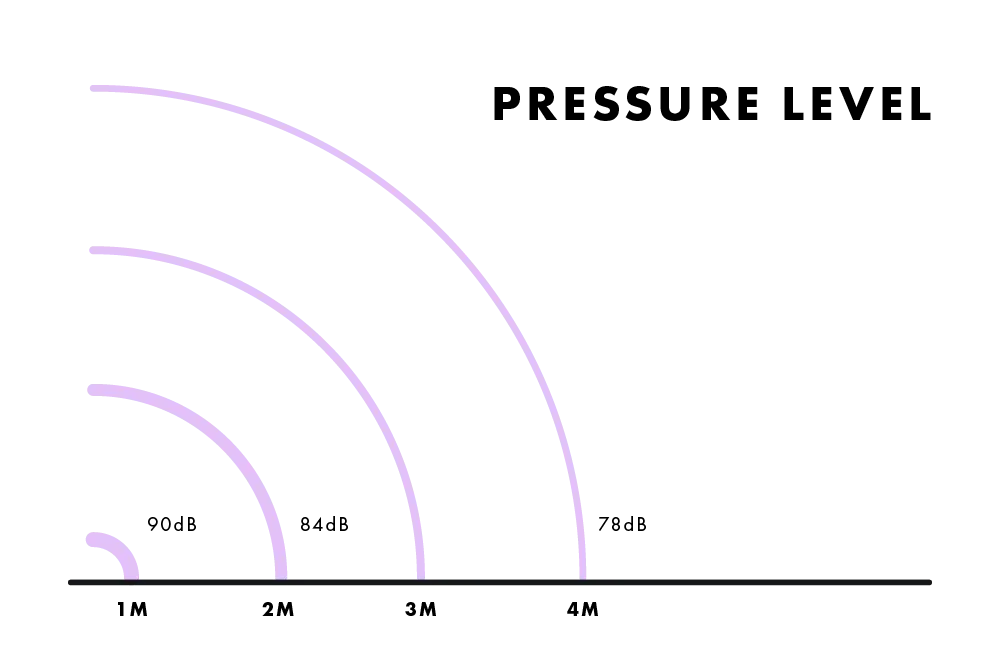
Sound waves propagate in the air by disturbing the ambient pressure. Although this disturbance is usually small, it is perceptible to the human ear. The smallest sound that a human can hear is nine orders of magnitude smaller than the ambient pressure and is called the threshold of hearing. The loudness of this disturbance is related to the sound pressure level (SPL), which is measured on a logarithmic scale in decibels (dB).
Sound wave propagation: frequency
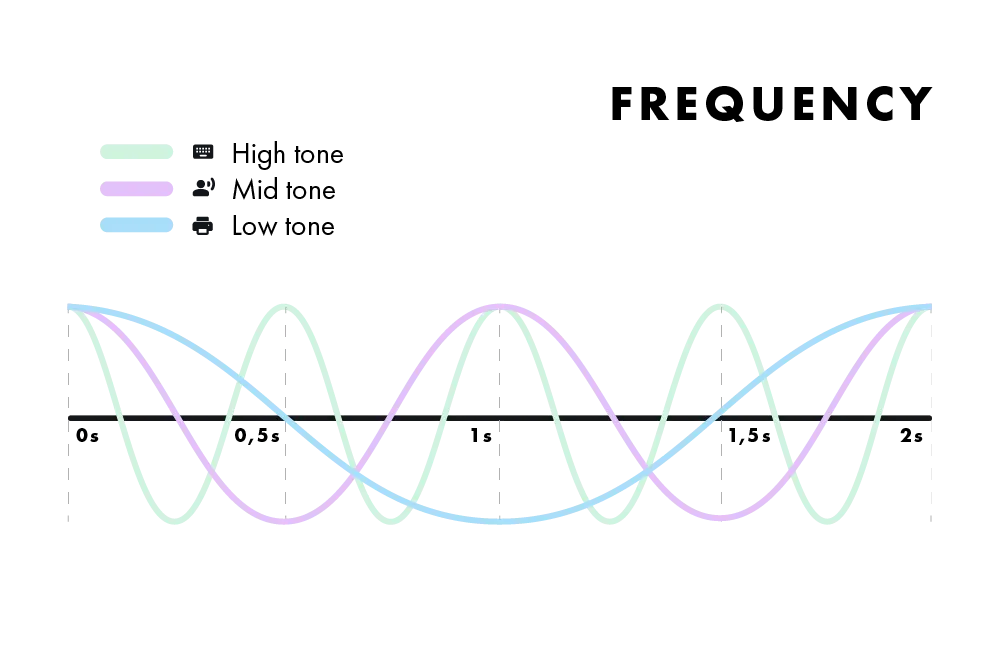
The frequency indicates the number of oscillations per second. The faster the particles vibrate, the higher the frequency. However, sound wave propagation depends on the material. The hearing range of the human ear is between 20 hertz and 20,000 hertz. Human speech ranges from 250 Hz to 2,000 Hz. Frequencies below or above this range can no longer trigger sound sensations in the inner ear.
Reverberation time
The reverberation time describes the measure of reverberation in a room. More precisely, it is the time it takes for a sound pressure level to decay by 60 decibels after the sound source in a room has been switched off. However, the reverberation time is frequency-dependent, since materials such as stone, wood, carpet or textiles absorb sound to different degrees. Thus, the length of the reverberation time depends on all absorption surfaces and the cubature of a building.

Echo
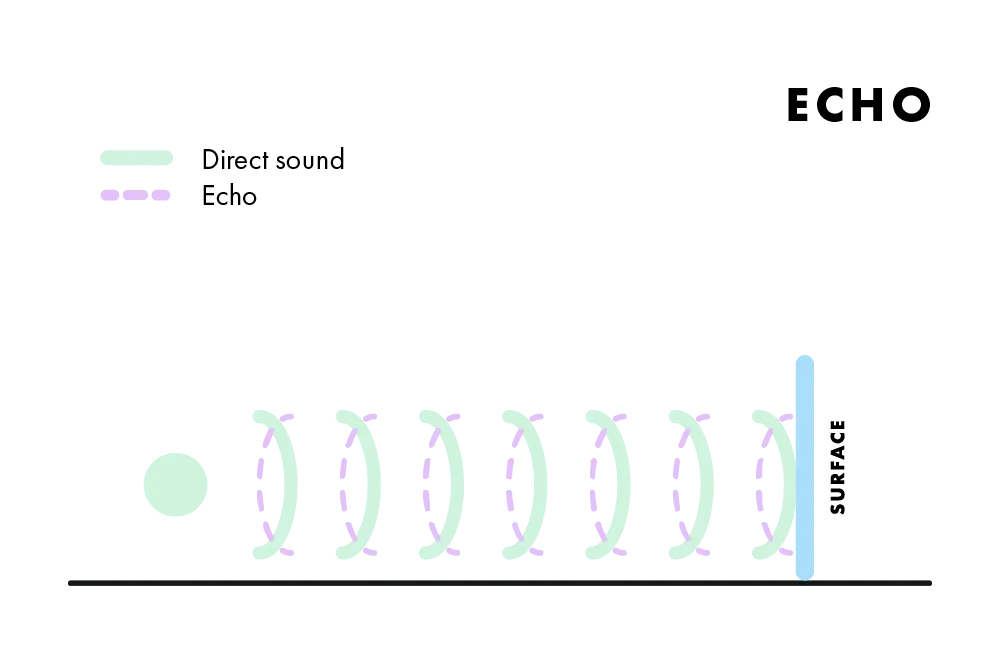
A conversation can be affected by an echo indoors and amplify disturbing sounds. Provided that the duration of the reverberation time is long enough, an echo can occur. It is a sound signal that is generated by the reflection of sound waves and arrives at the listener with a delay. The deceleration depends on the distance between the reflecting sound surface, the sound source and the listener.
Sound absorption
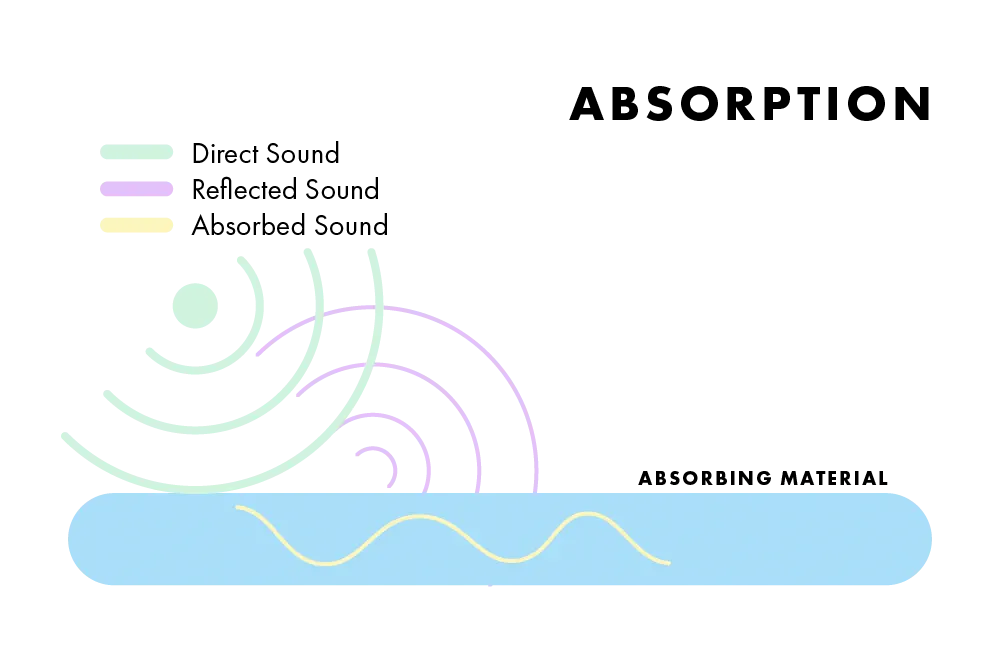
The aim of sound absorption is to reduce the sound energy, which is done by converting it into heat. Absorbent materials remove the energy from sound waves so that their intensity is reduced. The ability of a material to absorb sound is indicated by the sound absorption coefficient α, which defines the ratio of absorbed to incident sound energy. α = 0 means that there is no absorption and all incident sound is reflected. At α = 0.5, 50 % of the sound energy is absorbed and 50 % is reflected. At α = 1, the complete incident sound is absorbed.