For better room acoustics and the reduction of the reverberation time in a room, understanding the behaviour of sound waves is important. Therefore, in this article we give a brief overview of the most important terms for a better understanding.
Absorption
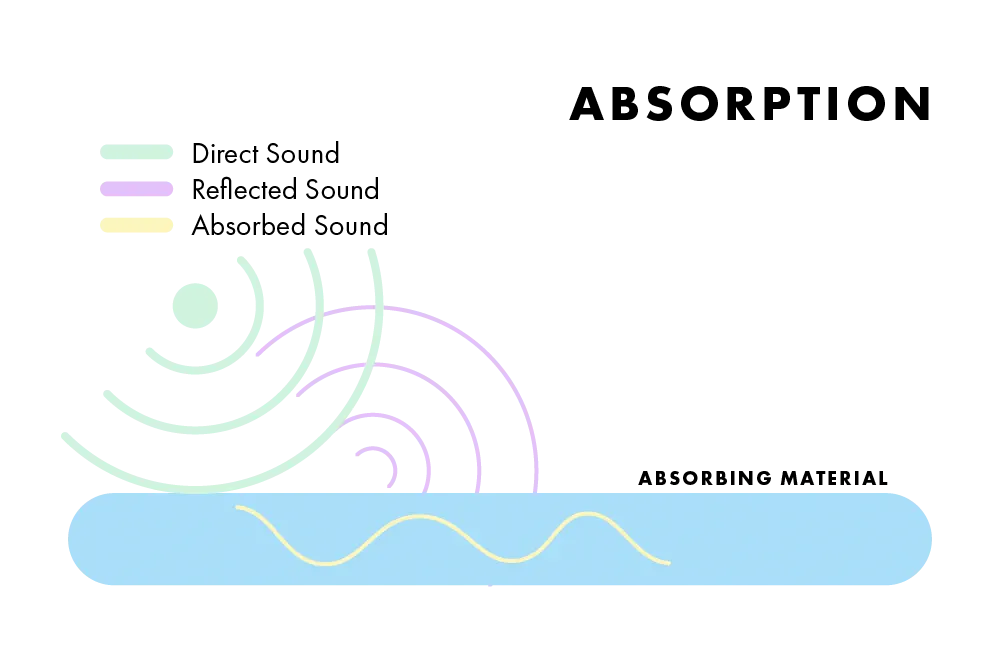
The aim of sound absorption is to reduce the sound energy, which is done by converting it into heat. Sound absorbing materials remove the energy from sound waves so that their intensity is reduced. The ability of a material to absorb sound is indicated by the sound absorption coefficient α, which defines the ratio of absorbed to incident sound energy. α = 0 means that there is no absorption and all incident sound is reflected. At α = 0.5, 50% of the sound energy is absorbed and 50% is reflected. At α = 1, the complete incident sound is absorbed.
Reflection
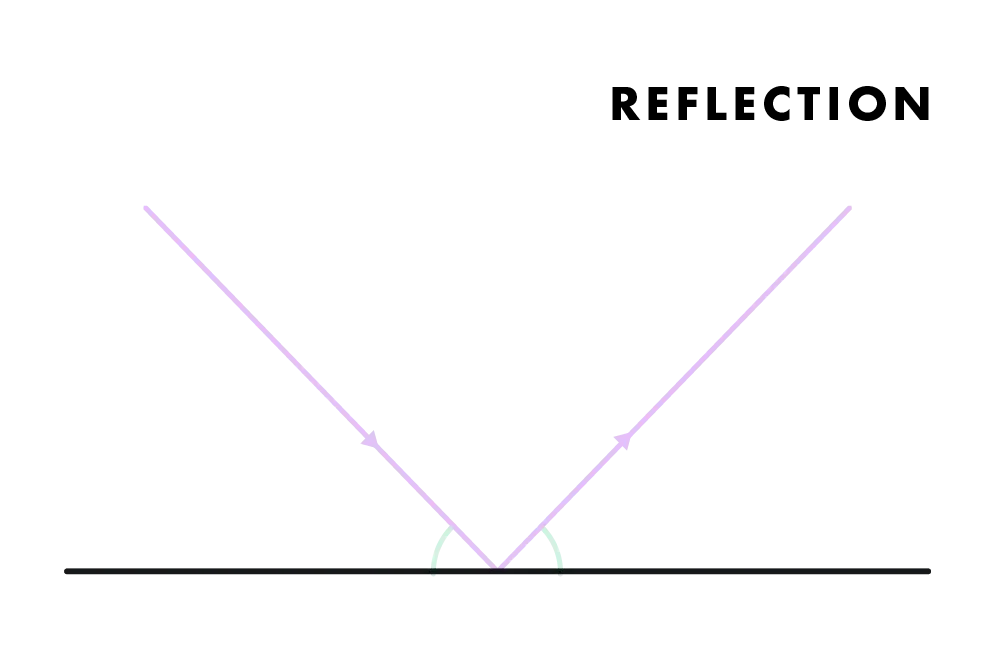
Generally, reflection of sound takes place when it is reflected from a flat and hard surface. Since the sound wave cannot enter a surface very far, the wave is reflected back like a ricochet. This means that the entrance angle of the incident sound is the same as the exit angle. The sound bouncing back from the surface creates a reverberation in the room.
Diffusion
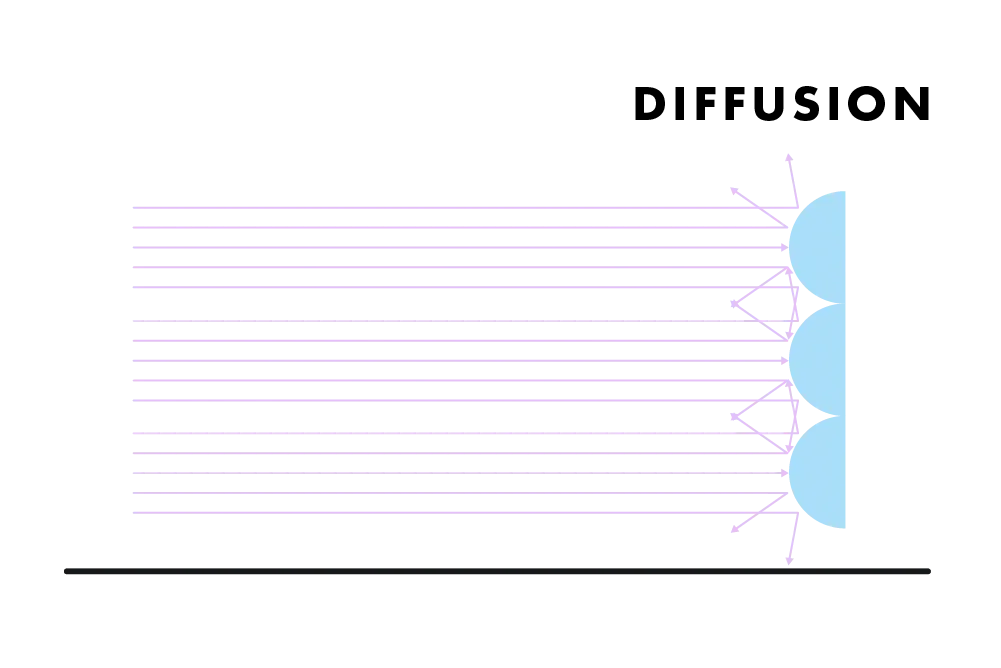
Diffusion is a method of distributing sound energy. In acoustics, this is understood as a construction element that scatters incident sound waves, thus avoiding a steady reflection of the sound. Sound absorption and diffusion are relevant for improved sound perception in rooms. Besides absorption, diffusion is the only acoustic tool to improve the sound in a room.
Diffraction
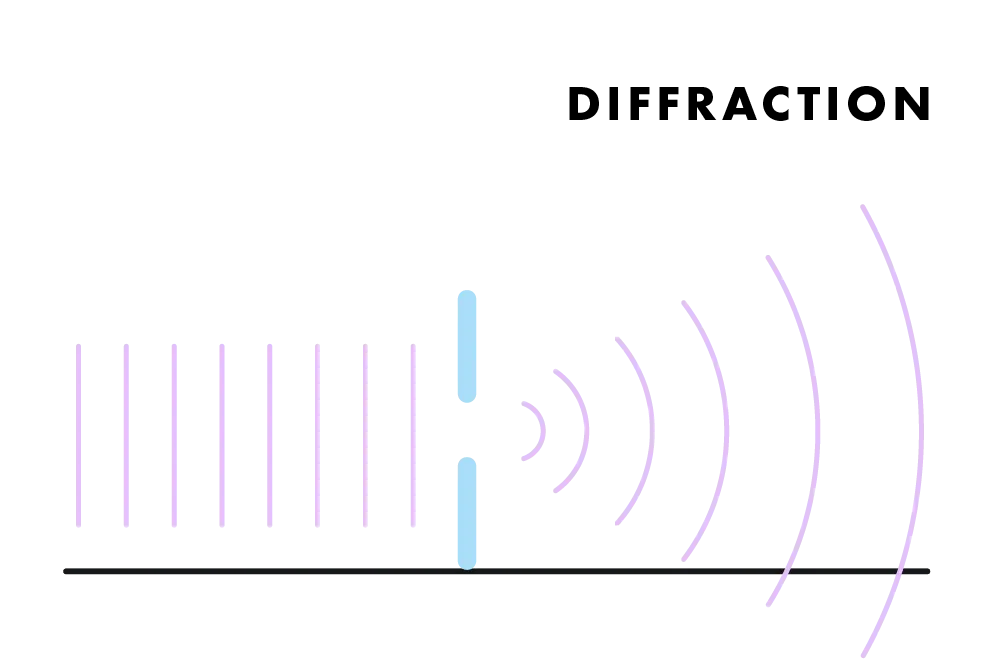
Diffraction occurs when a sound wave is bent at the edge of an object or passes through a narrow opening - for example, a doorway - and propagates. For a soundproof room, it is important to avoid diffraction of the sound. Otherwise, the sound wave will propagate outside the room and may be perceived as annoying by other people.
Refraction
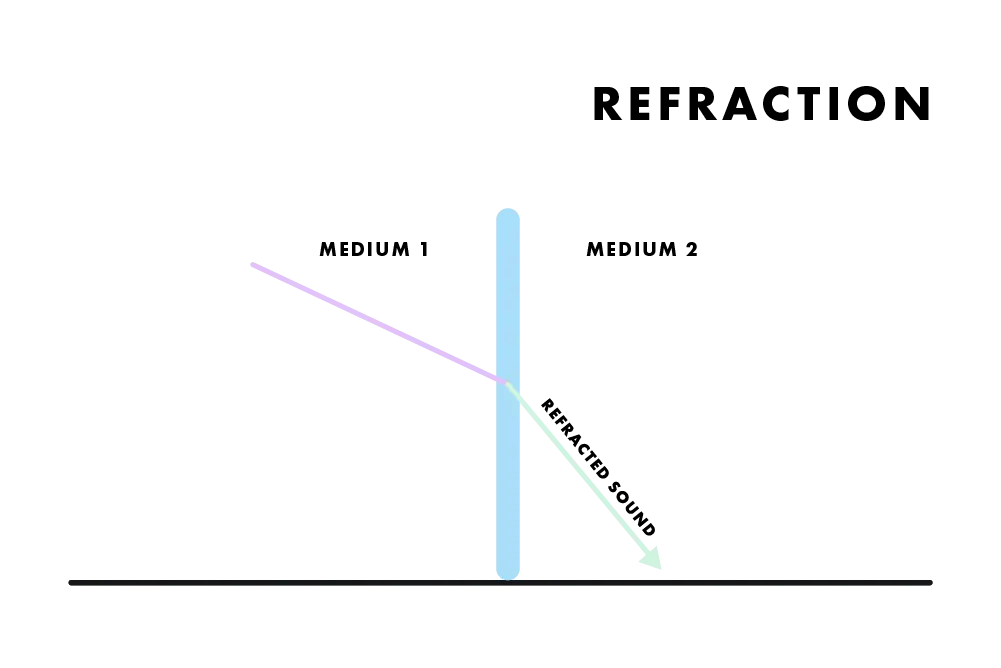
Refraction occurs when a sound wave moves from one material or object to another and is bent in the movement. Depending on the properties of the material or object, the speed and direction may vary. This wave is partially reflected, while the non-reflected part enters the second medium.
Transmission
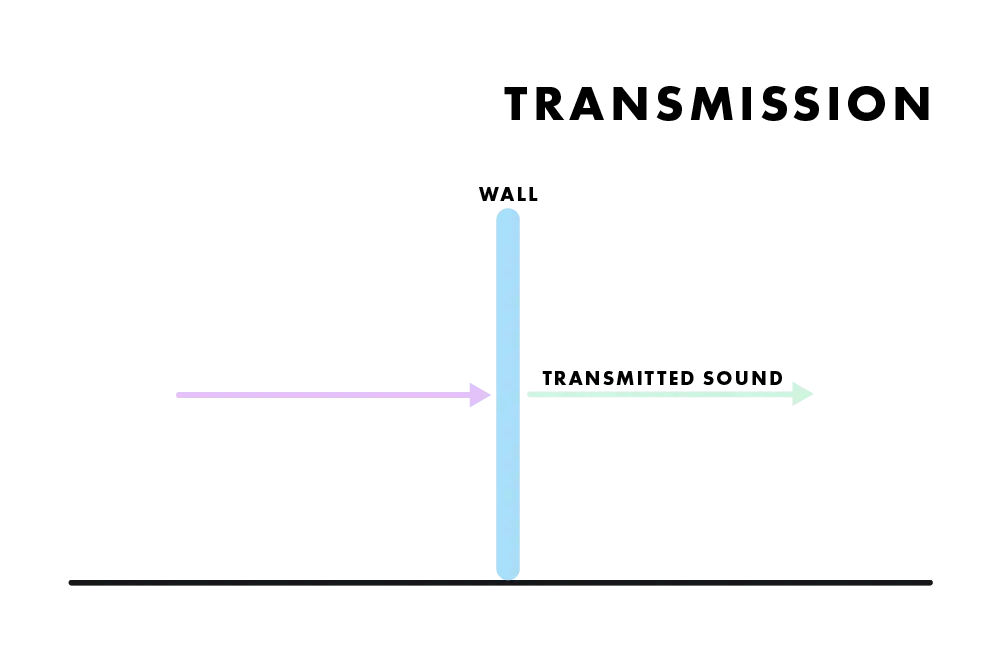
When a sound wave is transferred from one material or medium to another and exits on the other side, it is called transmission. The transmission is dependent on the acoustic impedance of the two materials.